
Ray2Volt Solar sales playbook
Rooftop Solar Sales SOP
Use this guide to explain the right system, answer common questions, and set clear expectations from the first conversation.
| Feature | On-Grid Solar | Hybrid Solar |
|---|---|---|
| Batteries | None | Included |
| Power Cuts | System shuts down | Seamless backup 24/7 |
| Cost Profile | Lowest investment | Higher because of batteries |
| Subsidy Eligible | Yes (PM Surya Ghar) | Yes (PM Surya Ghar) |
On-Grid Solar System
Connected directly to the electricity grid. Excess power earns credit through net metering—no batteries needed, lowest cost.
How On-Grid Works
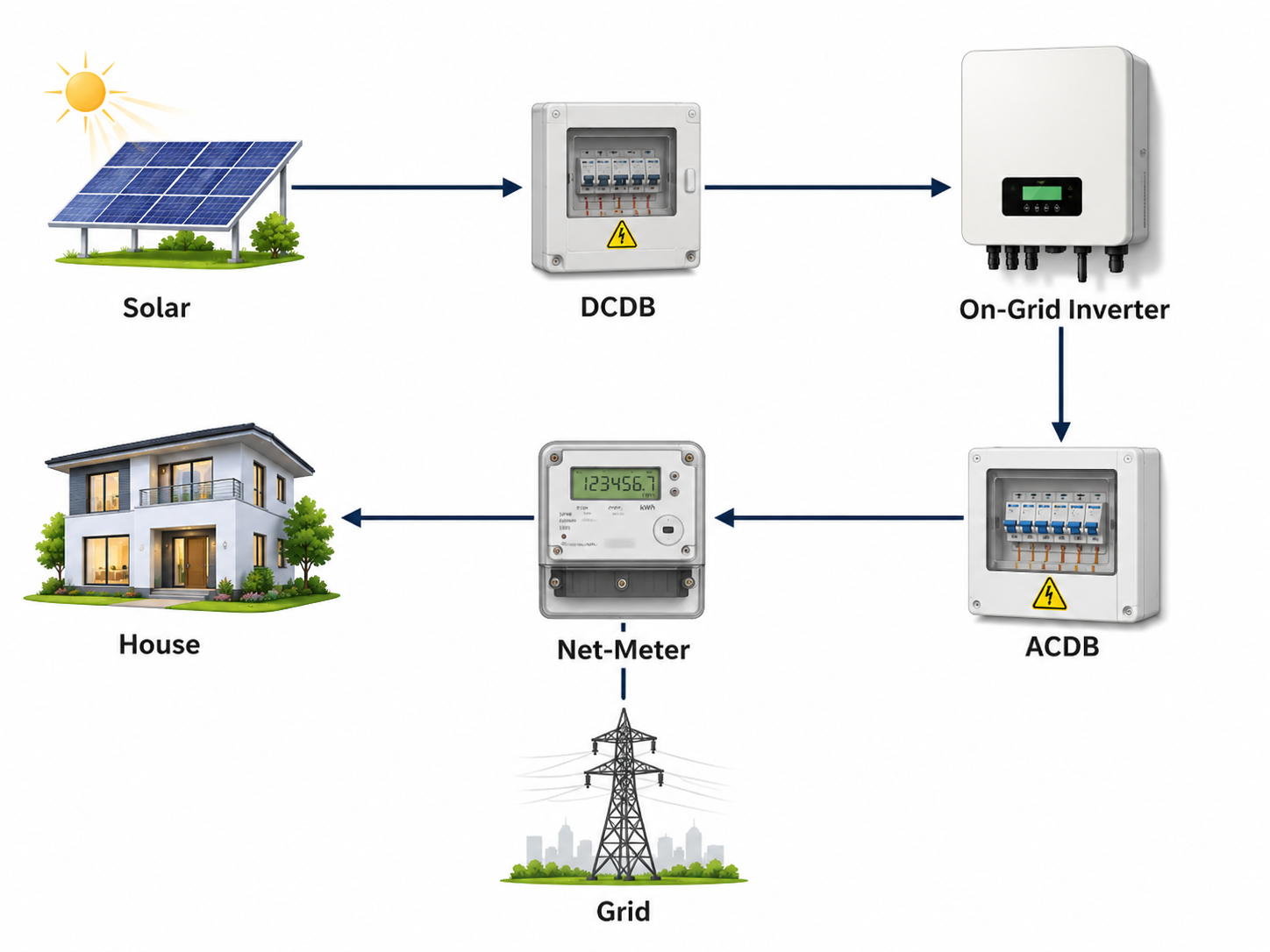
- Solar panels generate electricity during the day, powering the home directly.
- Excess power is exported to the grid; the net meter records credit.
- At night, grid power is used as usual, while daytime credits offset the bill.
- No batteries are required, so the system costs significantly less.
- Installation is completed without disturbing existing house wiring.
Best for: Homes and businesses with reliable grid power and minimal power cuts. Maximum savings with low maintenance.
Key Numbers (Example: 3 kW System)
System Components
On-Grid Brands
DCR Solar Panels
NDCR Solar Panels
On-Grid Inverters
Hybrid Solar System
Grid-connected with battery backup. Uninterrupted power 24/7—solar during the day and stored energy at night.
How Hybrid Works
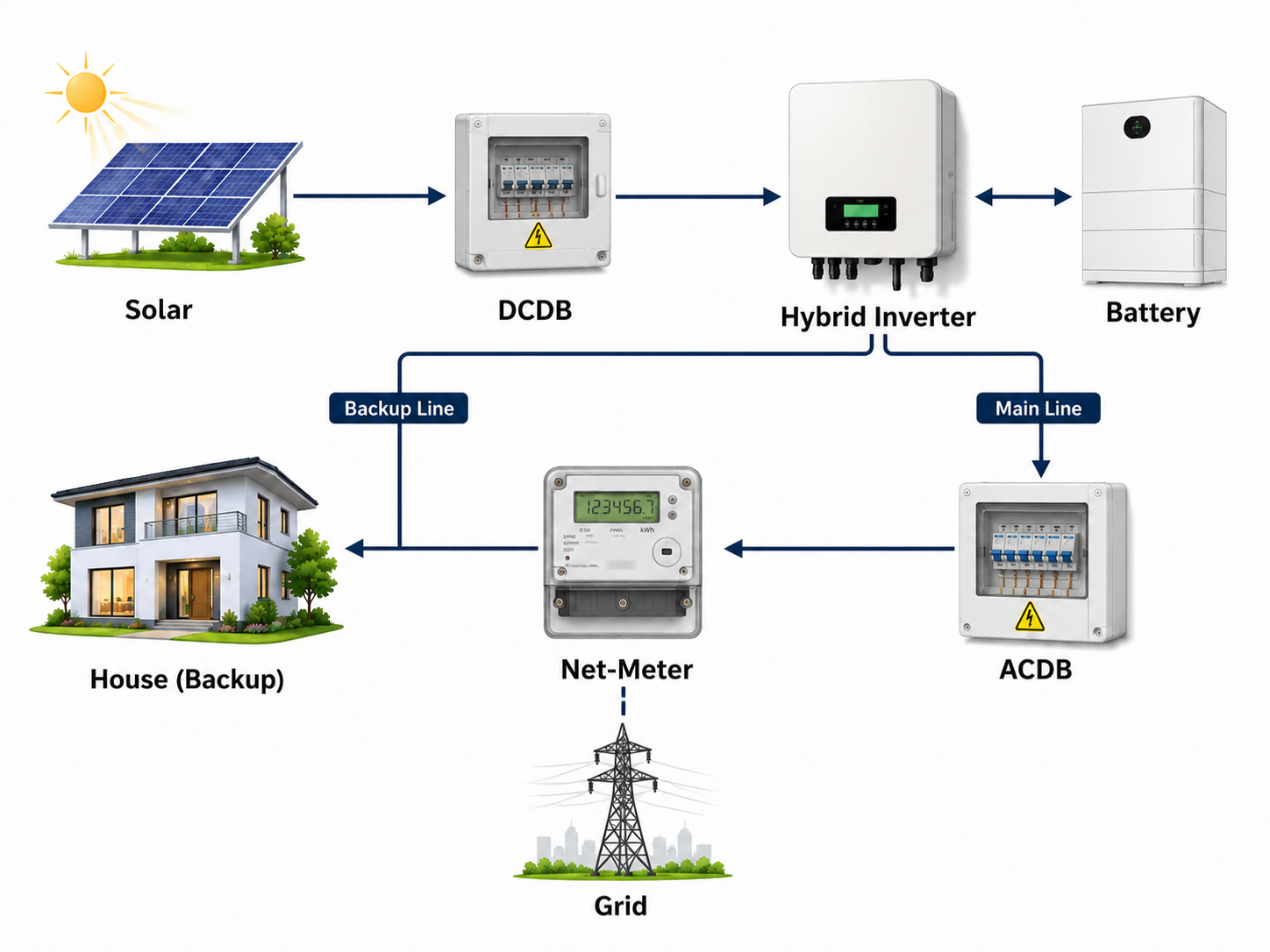
During the Day
- Solar panels power the home directly, even during a grid power cut.
- Excess solar energy charges the batteries.
- Remaining surplus is exported for net-metering credit.
During the Night
- Lithium-ion batteries automatically run ACs, fridges, lights, and fans.
- 90% depth of discharge uses far more stored energy than lead-acid batteries.
- Switching is seamless—no flicker or disruption.
During Power Cuts
- In daytime cuts, panels deliver power directly.
- During evening or night cuts, batteries take over instantly.
- The home remains comfortable with 24/7 uninterrupted power.
Best for: Areas with frequent power cuts and families who want round-the-clock comfort without UPS or generator hassles.
Battery Options
Lithium-Ion — Recommended
Why lithium? 10+ year life, lighter weight, faster charging, and 90% usable energy. Ideal for high-power appliances.
Lead-Acid Tall Tubular — Budget Option
System Components
Hybrid Brands
DCR Solar Panels
NDCR Solar Panels
Hybrid Inverter
Batteries
App Monitoring & Maintenance
Smart Monitoring: Track live solar generation from a smartphone with the Wi-Fi-enabled app.
Zero-Hassle Cleaning: Wash panels with water every few weeks, depending on dust. No special chemicals are needed.
PM Surya Ghar Muft Bijli Yojana
Government subsidy for residential rooftop solar, credited directly to the customer’s bank account after DISCOM approval.
Eligibility: An Indian citizen with a valid LT-1 electricity connection, a suitable rooftop, and no prior subsidy benefit.
Easy Solar Loan Option
The EMI can be lower than the current electricity bill, so customers can save from day one. Higher loan amounts are also available.
Partner Banks (PSU only)
Returns: ROI & IRR
Customers who compare solar against a fixed deposit or mutual fund will ask for these two numbers. Quote them from the Solar Savings Calculator for the customer's own bill — the figures below are a typical 3 kWp residential on-grid system, after PM Surya Ghar subsidy.
ROI in plain words: how many times the customer gets their money back over the system's life. A 3 kWp system at ₹2,26,400 — about ₹1,48,400 after subsidy — saves roughly ₹12–17 lakh of electricity over 25 years, eight to eleven times the amount invested. The calculator prints this as a percentage, so 800% means the customer earns eight times their money back on top of getting it back.
IRR in plain words: the yearly rate of return, so it can be compared like for like against an FD or SIP. Solar at 23–32% beats a bank FD several times over, and unlike an FD the returns are tax-free and rise as tariffs go up.
How to pitch it: "Your bill is money you never get back. The same money in solar pays for itself in about four years and then keeps returning free power for another twenty." Always show the customer's own numbers from the calculator — never promise a figure the report does not print.
Both figures are project returns on the net cost after subsidy, before any loan. With a loan the customer pays EMI instead of cash up front, so quote the EMI-versus-bill comparison alongside, not in place of, these returns.
Project Timeline
- Week 1 — Material Procurement & DeliveryPanels, inverter, mounting structure, and batteries for hybrid systems are procured and delivered.
- Weeks 2–3 — Full System InstallationThe certified team completes mounting, wiring, inverter setup, and battery integration.
- Week 4 — Net Meter & Subsidy ApplicationRay2Volt coordinates with DISCOM and starts the subsidy redemption process.